 Little Things
Flowers That Actually Land: How to Pick the Right Bouquet
Gas-station roses have a look. Cellophane sleeve, a little tired, chosen in forty-five seconds between paying for gas and getting back in the car. She'll say thank you. She'll also know exactly where they came from.
A bouquet chosen by someone who was paying attention has a different look entirely — and it doesn't have to cost more. Here's how to be that guy.
Rule 1: Her favorite flower beats the "best" flower
Roses are the default because they're safe, not because they're right. If she's ever mentioned loving peonies, ranunculus, sunflowers, or tulips — that's your answer, forever, and it costs you nothing extra. The message of "her flower" is I remembered. The message of red roses is I bought flowers.
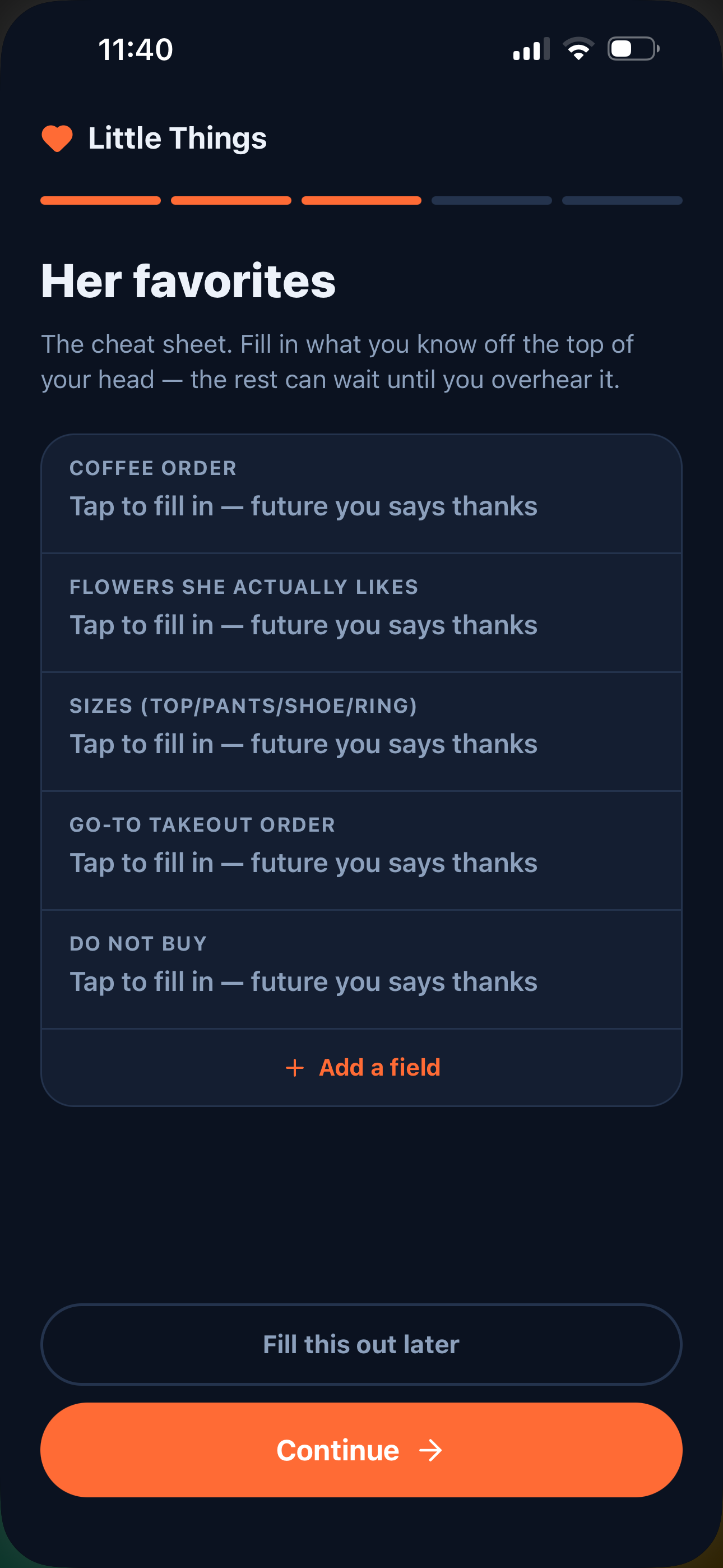
Don't know her favorite? Two options. The direct route: ask her, off-hand, nowhere near an occasion, and write it down where you'll find it again. The observational route: what does she stop to look at? What's on her phone case, her prints, her Pinterest? Pay attention once and you're set for a decade.
Rule 2: Match the bouquet to the moment
- "Just cuz" (random Tuesday): small and cheerful. A modest hand-tied bunch says "thought of you." An enormous arrangement on a random day says "what did you do?" — genuinely, she will wonder.
- Birthday: her favorite flower, full stop. If you're ordering, add a card message that references something specific about her year — not "Happy Birthday!" which the florist writes for everyone.
- Anniversary: this is the one to size up. If you know what was in her wedding or first-date flowers, repeating it is an elite move.
- Rough week: soft colors, no drama, delivered or handed over with food. Flowers plus takeout is a stronger play than flowers alone.
Rule 3: Fresh beats fancy
A $15 bunch that lasts ten days beats a $60 arrangement that wilts by Friday. Quick checks: firm, upright heads; buds that are just starting to open (fully open means they're already peaking); green, crisp stems. At the grocery store, the good flowers are usually in the back of the bucket, delivered that morning.
If they come in a cellophane sleeve, take it off before you hand them over. Thirty seconds, and the whole gesture upgrades.
Rule 4: Delivery is a tool, not a cop-out
Hand-delivered is intimate. Delivered-to-her-at-work is public — and public is powerful. Flowers arriving at her desk on a random Wednesday is a gesture her coworkers will make sure she never forgets. Save it for when you mean it.
For ordered flowers, a florist network like Florist One delivers from local shops same-day in most of the US (affiliate link — we earn a small commission, which helps us keep the app free). Write the card message yourself. Always write the card message yourself.
The cheat sheet version
- Learn her favorite flower once; use it forever.
- Small and unprompted beats big and obligatory.
- Check the buds, ditch the cellophane.
- Deliver to work when you want it to count double.
- Write the card yourself. Reference something specific.